Key highlights
- Patients most often describe the sensation as a hot rubber band snapped against the skin.
- The bikini line, underarms, and upper lip hurt the most, because the skin there is thin and the hair is coarse.
- Wavelength, cooling, and operator settings control comfort more than personal pain tolerance does.
- Most patients need 2 to 6 sessions, and the skin looks like a mild sunburn for a few hours afterward.
- High-strength numbing creams sold online for cosmetic procedures fall outside FDA limits and have drawn agency warning letters.
Does Laser Hair Removal Hurt?
Laser hair removal stings briefly with each pulse, like a hot rubber band snap, across the 2 to 6 sessions most patients need. Painless is a marketing word rather than a clinical one. How much it stings depends far more on the area being treated than on how tough you are.
What does laser hair removal feel like?
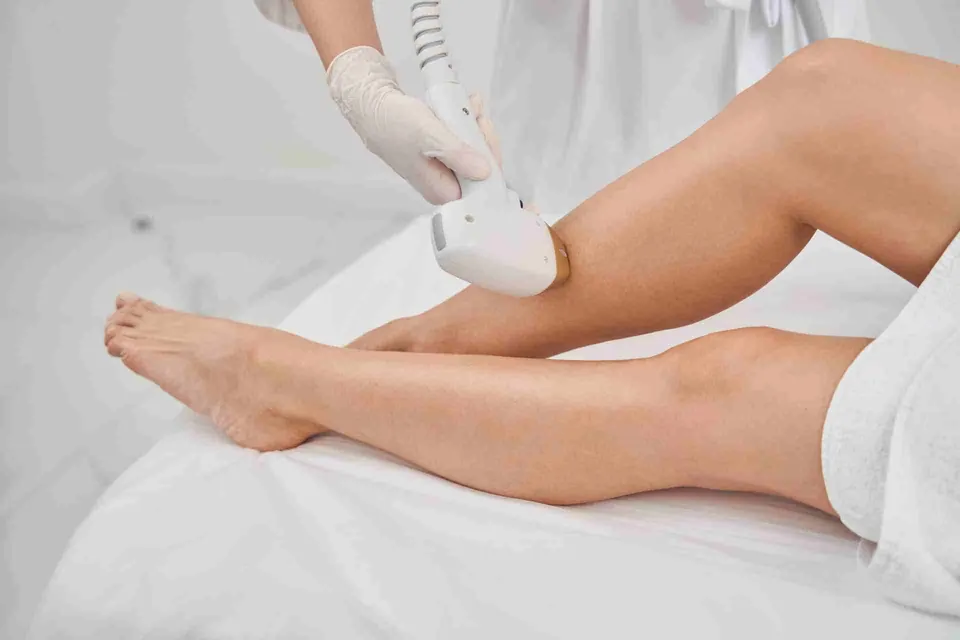
Laser hair removal feels like a hot rubber band snapped against the skin, one snap per pulse, with a flash of heat arriving just behind it.
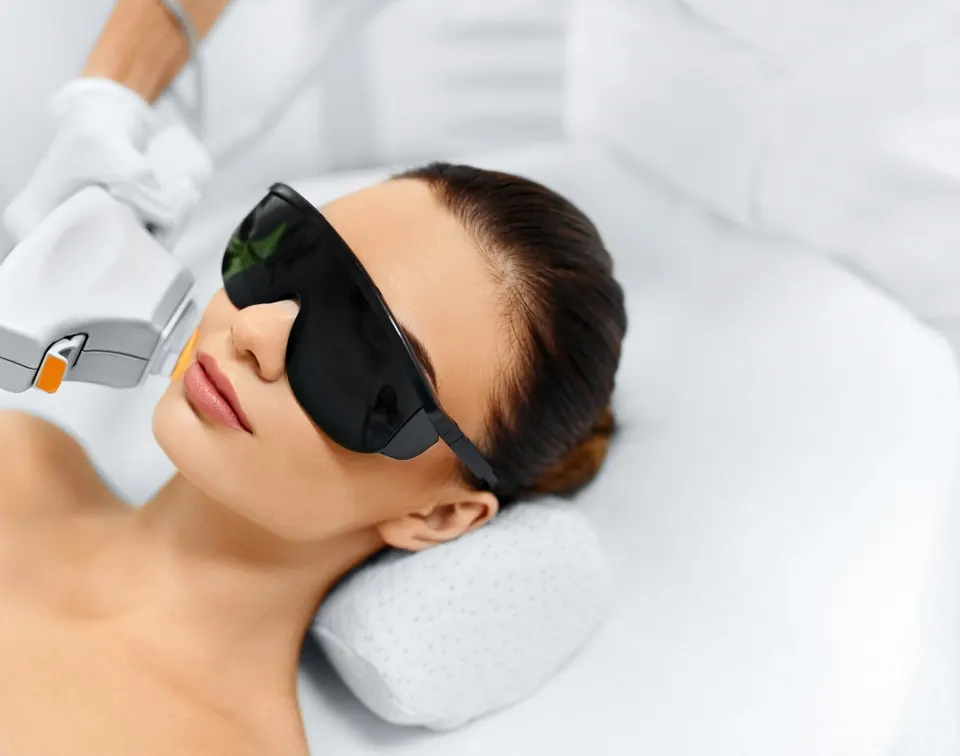
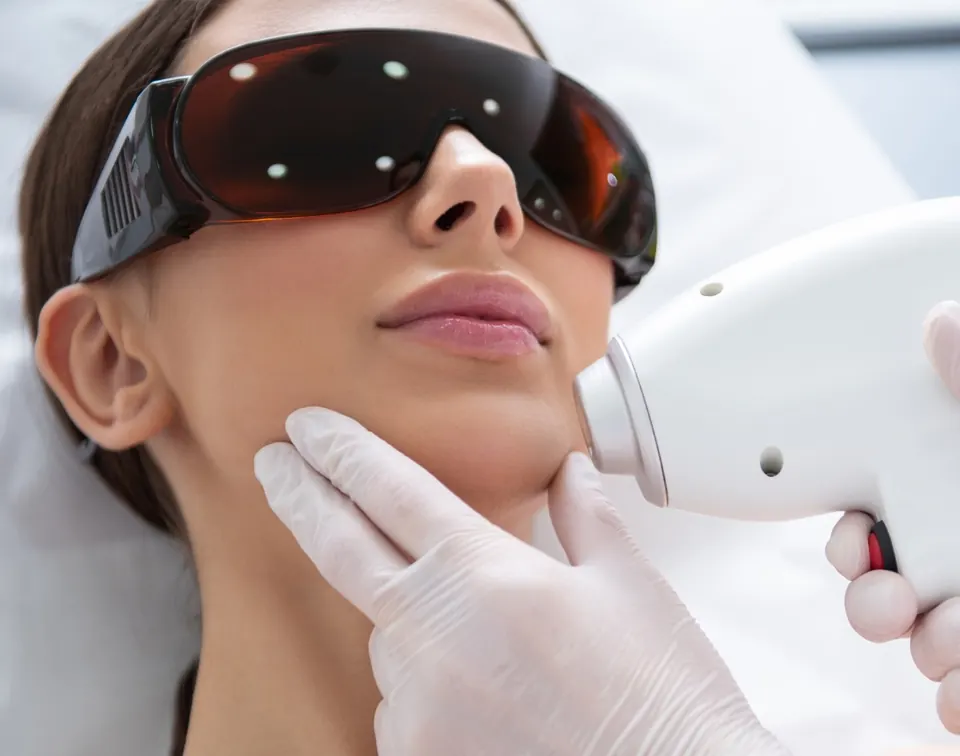
A first upper lip appointment runs about five minutes. You put on protective goggles, the provider presses a cooled handpiece to your skin, and the device clicks through a row of pulses along the lip line. Each pulse lands like a snap. The heat catches up half a second later, and by the time you think about flinching, the handpiece has moved to the next spot.
Two things surprise first-timers. The faint smell of singed hair comes from stubble on the surface rather than from anything happening under it. And the cold plate pressed against your skin between pulses does as much for comfort as anything else in the room.
Very few patients would call the experience relaxing, and most describe it as easily survivable.
What people get told, and what is true
| What you have heard | What is true |
|---|---|
| "It's completely pain-free" | Every pulse stings. Good technique manages the sting instead of removing it. |
| "It hurts worse than waxing" | Waxing tears hair from the root across a whole strip. A laser pulse is hotter, sharper, and over in an instant. |
| "It feels the same everywhere" | Thin skin over bone hurts most. Shins, forearms, and stomachs are mild by comparison. |
| "Numbing cream is always the answer" | Numbing helps on small sensitive areas. The FDA has warned about high-strength products sold online for this purpose. |
| "Pain is just personal tolerance" | The laser wavelength, the cooling system, and the settings your provider chooses matter more. |
Which areas hurt the most?
The bikini line and underarms hurt the most, followed by the upper lip, with legs, arms, and the stomach at the mild end of the range.
| Area | How it usually feels |
|---|---|
| Bikini line and Brazilian | Sharpest. Thin skin, dense coarse hair, few places to look away |
| Underarms | Sharp but short. The whole area takes about a minute |
| Upper lip | Intense for a few seconds, then done |
| Back and chest | Moderate sting, long session, so fatigue becomes the issue |
| Legs, arms, stomach | Mildest. Thicker skin absorbs more of the pulse |
Thin skin sits closer to nerve endings and often lies directly over bone, which is why the same setting feels sharper on a bikini line than on a shin. Coarse dark hair also holds more pigment, and pigment is what absorbs the light and converts it to heat. Dense coarse hair in a small area means more heat in that area, which is the real reason the bikini line has its reputation.
Tattooed skin is a separate question. Pigment in ink absorbs laser energy the same way pigment in hair does, so laser hair removal over tattooed skin is avoided rather than adjusted.
Does Brazilian laser hair removal hurt?
Brazilian treatments are the most uncomfortable area on most patients, because the skin is thin and the hair is coarse and densely packed. The sting is sharp for the second it lands, and the full area usually takes under 15 minutes. Many patients ask for numbing on this area specifically, which their provider can arrange.
Does laser hair removal hurt on the face?
Facial pain depends on the spot. The upper lip is one of the sharper areas on the body, since the skin is thin and sits over the jaw and teeth. Cheeks, forehead, and chin are noticeably milder. Facial sessions are also short, often five minutes or less, so the discomfort is brief.
Does laser hair removal hurt more than waxing?
Laser hair removal and waxing hurt in different ways, so ranking one above the other tells you very little.
Waxing is a tearing sensation across an entire strip at once, followed by a burn that lingers for a minute. A laser pulse is hotter and sharper at the moment it lands, and gone almost immediately. Patients coming from years of waxing usually rate laser as easier. Patients who have only ever shaved usually find the first session more of a shock.
The difference that matters most is frequency. Waxing repeats every three to four weeks indefinitely. Laser sessions are spaced weeks apart and taper off.
Why does one session hurt more than another?
Four things drive comfort: the laser wavelength, the cooling method, how coarse the hair is that day, and how the area was prepped.
Wavelength comes first. In a comparison of hair removal devices on the underarm, patients rated the alexandrite and diode lasers the most tolerable, while the Nd:YAG laser and a combination approach were rated the most painful. A clinic choosing a longer wavelength for darker skin tones is making a safety decision, and slightly more sting can be part of that trade.
Cooling comes second, and the effect shows up in the numbers. One small underarm study of 12 participants recorded immediate mean pain scores of 5.7 out of 10 with one comfort technology and 6.5 out of 10 with another. Both scores sit in the middle of the scale, which is a useful reality check against any clinic promising nothing at all.
Hair coarseness changes across a treatment course. Early sessions treat thick pigmented hair that absorbs a lot of energy. Later sessions treat whatever is left, which tends to be finer and sparser. Plenty of patients report that sessions three and four feel easier than session one. That pattern is widely reported rather than measured, so treat it as a reasonable expectation instead of a promise.
Prep matters more than people expect. Arriving shaved, not grown out, keeps the energy in the follicle where it belongs. Surface hair singes, which produces both the burning smell and a layer of extra sting that has nothing to do with the treatment working.
One clarification while we are on devices. IPL photofacial treatments use broad-spectrum light rather than a single laser wavelength, and the two are often confused in online reviews. A patient describing an IPL session is describing a different sensation.
Can you use numbing cream before laser hair removal?
Numbing cream can help, mainly on small sensitive areas, and the product should come from your provider rather than from a shopping cart.
The American Academy of Dermatology notes that some patients receive a numbing gel, and that numbing helps most when a small area is being treated and the skin is very sensitive. Salem patients ask about this most often for the bikini line and upper lip, which is exactly the situation the AAD describes.
The part that gets skipped in most online advice is the regulatory side. Over-the-counter external analgesics are limited to lidocaine concentrations of 0.5% to 4%. Products sold at higher strengths, or combining lidocaine with other anesthetic ingredients, sit outside those limits and are treated by the FDA as unapproved drugs. The agency has issued warning letters over creams marketed for use ahead of laser procedures, citing a specific concern: unsupervised patients apply large amounts over large areas of skin, sometimes cover it, and absorb far more of the drug than anyone intended.
Red flags on numbing products: anything sold as maximum strength for cosmetic procedures, anything combining several anesthetic ingredients, any instruction to cover the area with plastic wrap, and any clinic that hands you a cream without telling you how much to use and where.
Ask your provider what they use and how to apply it. That conversation takes 30 seconds and removes the entire problem.
How does a provider keep it comfortable?
Comfort is a settings decision, and settings are a clinical judgment rather than a preference.
A careful session starts with a test pulse on a small patch, which tells the provider how your skin responds at a given energy level. From there the settings are matched to your skin type and hair, and the cooling runs continuously against the skin. Working in short passes, checking in between them, and adjusting rather than pushing through is what separates a tolerable appointment from one people describe badly afterward.
Rick Meyers, FNP-BC, founded Functional Wellness & Aesthetics after nearly 30 years in medicine, including a background in pain management. Patients get told what a session will feel like ahead of time, in plain terms, and treatment settings get adjusted when someone says a pass was too much.
Ask what your session will feel like on your skin and your hair. A five-minute conversation answers it.
Ask what to expect at a Salem consultationConsultations are free, and nobody is going to push a package on you.
How long does the discomfort last afterward?
The sting stops the moment the handpiece lifts, and the treated skin stays warm and pink for a few hours.
Redness and mild swelling that resemble a sunburn are expected, and the AAD points out that a cool compress helps. Laser hair removal generally does not call for real downtime, and most patients go back to their day straight from the appointment. Skip the sauna, hot tub, and heavy workout that evening, since heat on already-irritated skin extends the sting for no reason.
Red flags after a session: blistering, skin that is still painful the next day, crusting, or patches that lighten or darken. Any of these means the settings were wrong for that skin, and the right move is to call the clinic that treated you rather than to ask a forum. The AAD is direct about this risk, noting that burns, lasting skin color changes, and scarring can happen when treatment is performed by inexperienced hands.
Is it supposed to feel like burning?
A brief hot sensation with each pulse is normal, and so is warmth for a few hours afterward. Sustained burning during the session, pain that builds pass after pass, or a sharp jump in intensity is a signal to speak up immediately. Providers can lower energy, add cooling, or stop. Saying something mid-session is expected.
Book a consultation
Our Salem office runs free consultations, and you will get a straight answer about what your sessions will feel like.
TL;DR
- Laser hair removal stings with each pulse, most often described as a hot rubber band snap, and the sensation ends when the pulse does.
- Bikini line, underarms, and upper lip are the sharpest areas. Legs, arms, and stomach are the mildest.
- Wavelength, cooling, hair coarseness, and prep drive comfort more than personal pain tolerance does.
- Numbing cream helps on small sensitive areas, and high-strength products sold online for cosmetic use fall outside FDA limits.
- Expect mild sunburn-like redness for a few hours. Blistering, next-day pain, or color changes call for a phone call to your provider.
Frequently asked questions
Does laser hair removal hurt on the stomach?
Stomach treatments are among the milder areas. The skin is thicker than on the bikini line or underarm, and stomach hair is usually finer, so each pulse lands as a warm tap rather than a sharp snap. The area near the navel and along the bikini line tends to be more sensitive than the rest.
How many sessions of laser hair removal will I need?
The AAD reports that most patients need 2 to 6 laser treatments, with roughly 10% to 25% hair reduction after the first session. The exact number depends on the area, your hair color and thickness, and your skin tone. Sessions are spaced several weeks apart so each one catches follicles in an active growth phase.
Can I take pain medication before laser hair removal?
Ask your provider before taking anything, including over-the-counter options. Some medications and supplements affect bruising, skin sensitivity, or how your skin responds to light. Your provider knows what you are being treated with and can tell you what is appropriate for your health history and the area being treated.
Does laser hair removal get less painful over time?
Many patients report that later sessions feel easier, because early treatments remove the thickest and most pigmented hair, leaving finer and sparser growth behind. This pattern is widely reported rather than formally measured, so consider it likely rather than guaranteed. Your comfort also improves once you know what the sensation is.
Is laser hair removal safe on darker skin tones?
Treating richly pigmented skin is a wavelength and settings question. Melanin in the skin competes with melanin in the hair for laser energy, so providers use longer wavelengths and adjusted settings to target the follicle. A consultation and a test patch establish what is appropriate for your skin.

About the author