Key highlights
- Ozempic face is facial hollowing and skin laxity that follows rapid fat loss, and it appears after bariatric surgery and crash dieting as readily as it does on a GLP-1.
- The medication is not acting on facial skin. Facial fat compartments shrink faster than the skin covering them retracts.
- In the STEP 1 body composition substudy, participants on semaglutide lost 19.3% of total fat mass and 9.7% of lean body mass over 68 weeks.
- Hydration, collagen powder, and facial exercises do not decide which fat pads empty.
- The FDA has approved dermal fillers for augmentation of the cheeks and chin, which is the route providers use to address hollowing.
Ozempic face is facial hollowing and skin laxity caused by rapid fat loss, and it follows any fast drop in body weight. The distinction matters because it changes what you can do about it. We see patients who spent months on hydration and collagen powder without knowing that the pace of their weight loss was the part a provider could adjust.
What people try for Ozempic face, and what it does
| What people try | What it does |
|---|---|
| Losing weight more gradually | The one lever with a measurable effect on severity. Pace is set by your prescriber. |
| Drinking more water | Supports general skin condition. Does not decide which facial fat pads empty. |
| Collagen supplements | Hollowing comes from lost fat volume, and collagen powder does not replace fat. |
| Facial exercises | Work on muscle. Facial volume loss involves fat and skin, so the cause goes untouched. |
| Retinoids and daily SPF | Protect skin quality over years. No effect on volume already gone. |
| Dermal filler or skin tightening | The two clinical routes. Filler replaces volume, energy-based treatments address firmness. |
What causes Ozempic face?
Rapid fat loss empties the facial fat compartments faster than the skin covering them can retract. Your face carries fat in distinct pads, including the buccal pad in the cheek, the malar pad higher up, and a thin layer across the temples. Those pads give the face its fullness and hold the overlying skin taut.
Think of a cushion inside a fitted cover. Take stuffing out of the cushion and the cover does not shrink to match. It wrinkles, sags at the edges, and hangs where it used to sit smooth. Skin behaves the same way, and it behaves that way more slowly the older you are.
The face shows this before the rest of the body does, because there is very little fat there to begin with and no clothing over it. A five-pound change across your torso is invisible. The same proportional change across your temples and cheeks is the first thing people notice about you.
Fat is not the only tissue that leaves. In a body composition substudy of the STEP 1 trial, 140 adults with overweight or obesity had DEXA scans at baseline and at week 68. Participants taking semaglutide 2.4 mg lost 15.0% of body weight over that stretch, made up of a 19.3% reduction in total fat mass alongside a 9.7% reduction in lean body mass. Those figures describe that trial population, which averaged 98.4 kg at the start and was 76% women. They describe what researchers measured in that group. Your own body composition change could look quite different.
None of this is a reaction to the drug itself. The side effects associated with semaglutide are largely gastrointestinal, and facial change sits in a separate category: a downstream consequence of losing a meaningful amount of weight quickly.
Can Ozempic face be prevented?
Partly, and not through the methods most articles recommend. You cannot direct your body to take fat from your abdomen and leave your temples alone. Fat comes off where your genetics, age, and hormones say it comes off, and no supplement or routine overrides that.
What does have an effect is how fast the weight comes off. Slower loss gives skin more time to remodel and gives facial fat compartments a gentler gradient to follow. Clinicians who counsel patients on this treat pace as a dial they can adjust across the course of treatment.
Your prescriber holds that dial. Dose, titration schedule, and how long you sit at a given step are clinical decisions made against your health history, your other medications, and what you are treating. Adjusting any of it on your own trades a cosmetic concern for a medical risk, which is a poor exchange.
The realistic version of prevention is a conversation early rather than a correction late.
How to take Ozempic and not get Ozempic face?
Raise facial changes with your prescriber as soon as you notice them, since the pace of weight loss is the variable they can adjust and you cannot. Expect some volume change to accompany meaningful weight loss. Ask what your plan looks like if the changes continue, so you are deciding rather than reacting.
What does Ozempic face look like?
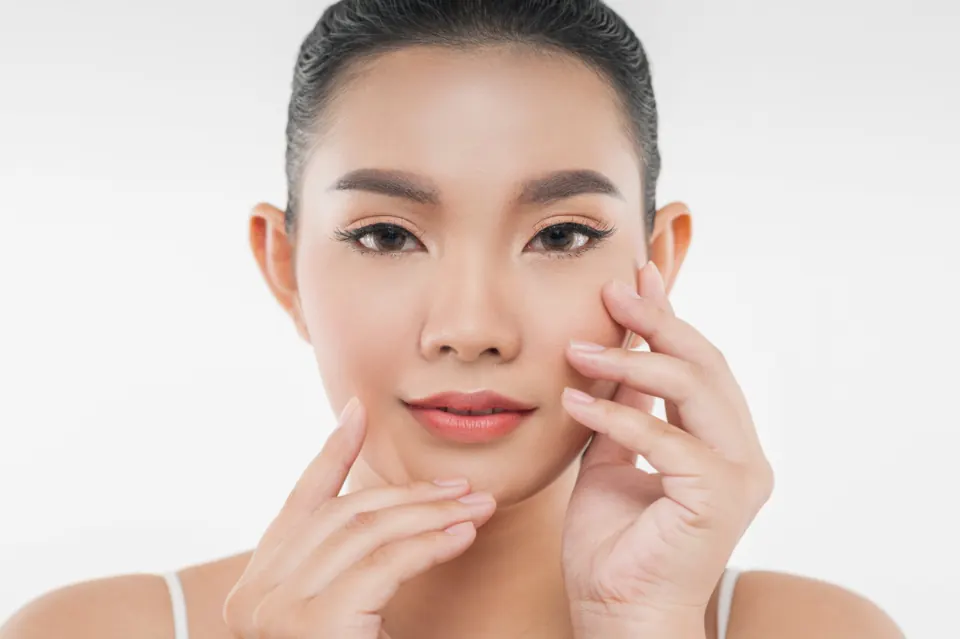
Hollowed cheeks and flattened temples come first, followed by a softer jawline, deeper folds running from the nose to the mouth, and looser skin along the neck. Patients describe it in plainer terms: gaunt, tired, drawn, older than the number on their driver's license.
Jowls are the change people react to most strongly. The skin along the jaw was being held up by fat underneath it, and once that support thins, gravity does what gravity does.
What are the early signs of Ozempic face?
Temple flattening and shadowing under the eyes usually register before anything happens along the jaw. Both are subtle enough that people often notice them first in photographs. Lighting exaggerates hollowing, so a change that seems mild in your bathroom can look severe in a group photo taken from below.
Does Ozempic face go away on its own?
Some skin laxity improves once weight stabilises, because skin continues to remodel for months after the weight itself stops moving. Volume lost from facial fat compartments is a different matter, and it does not refill on its own while you stay at your new weight.
We want to be careful here. Several sources claim a specific percentage of facial volume returns at maintenance, and we could not trace any of those figures to a study. What we can state is the direction. Skin firmness improves for some people over time, and lost fat volume generally does not come back on its own.
Regaining weight to restore your face is not a trade any clinician recommends, and the fat rarely returns to the same compartments in the same proportions anyway.
How to make Ozempic face go away?
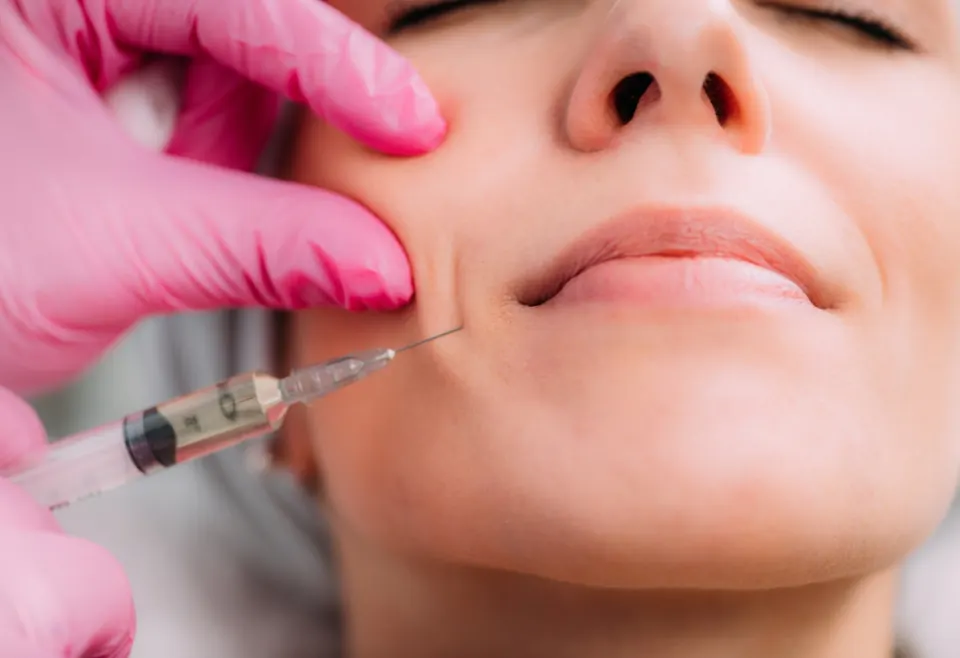
Two clinical routes address it. Dermal filler replaces lost volume directly in the cheeks and chin, with results that build in over about a week. Radiofrequency microneedling and laser resurfacing work on skin firmness and texture rather than volume. The right choice depends on which change is bothering you most.
What treatments restore facial volume after weight loss?
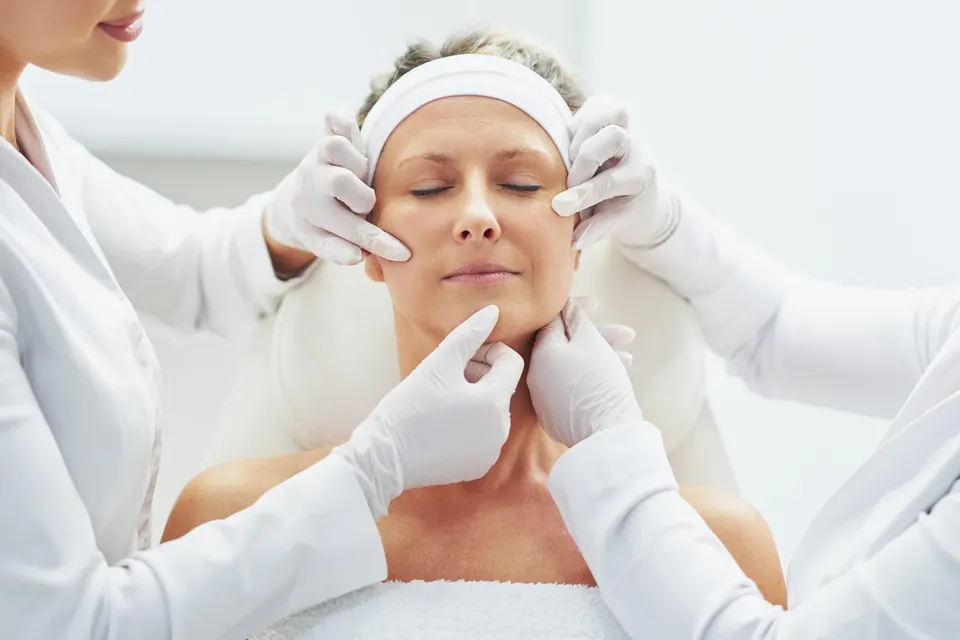
Dermal fillers replace lost volume directly, while radiofrequency microneedling and laser resurfacing improve skin quality and firmness without adding volume. Most patients who come to us after significant weight loss need some combination, because thinning fat and loosening skin arrive together.
Fillers are gel implants placed in specific facial planes. The FDA has approved them for adults 22 and older, for augmentation of the cheeks, chin, lips, and back of the hand, and for moderate to severe facial folds. A note on precision: the agency's explicitly listed indication for restoring facial fat loss covers lipoatrophy in people with HIV. Treating post-weight-loss hollowing works through the cheek and chin augmentation indications, which is a distinction most articles on this topic gloss over. Results from our dermal filler treatments typically last 6 to 18 months, depending on the product and the area.
Volume placement is a structural decision. Filling the hollow you can see often produces a worse result than supporting the structure above it, which is the logic behind an 8 point filler face lift and why placement mapping matters more than volume.
For skin that has loosened rather than emptied, radiofrequency microneedling delivers energy into the dermis to stimulate collagen over a series of sessions. Improvement builds gradually across months instead of appearing at once.
Red flags: any provider who quotes you a syringe count before examining your face, any clinic that will not tell you which product it is placing, and any promise about how long results will hold that does not come with a range.
How to raise facial changes with the provider managing your GLP-1
Bring it up at your next appointment instead of adjusting anything yourself, because pace, dose, and timing are clinical decisions that account for more than your face. A provider looking at the whole picture can weigh facial change against your metabolic goals, which is a judgement neither a forum nor a checkout page can make.
Prescribing relationships matter more here than they do for most cosmetic questions. Ozempic is approved for type 2 diabetes. A separate approval in 2021 covered semaglutide 2.4 mg for chronic weight management, which is a different indication with different dosing. Knowing which one you are on, and why, is the starting point for any conversation about slowing things down.
At Functional Wellness & Aesthetics in Salem, the medically supervised GLP-1 program and the aesthetic side of the practice run under the same roof and the same provider. Rick Meyers has been practising medicine for nearly 30 years, and patients raising facial concerns get both halves of the answer in one visit rather than a referral and a wait.
If your concern is firmness rather than volume, our guide to tightening facial skin covers the options in more depth.
If your face is changing faster than you expected on a GLP-1, that belongs in front of the provider managing your dose.
Talk through your facial changes with RickConsultations at the Salem office are free.
Facial changes and weight goals are two conversations, and they go better together than apart.
Doctor-led care from Rick Meyers, FNP-BC, at the Salem office on Ramsgate Square SE.
TL;DR
- Ozempic face is facial hollowing and skin laxity produced by rapid fat loss, with no direct action of the medication on facial skin.
- Any fast weight loss produces it, including after bariatric surgery.
- The rate of loss is the one preventive lever, and your prescriber controls it.
- Hydration, collagen supplements, and facial exercises have no bearing on where fat leaves.
- Volume already lost is addressed with filler, while skin firmness is a separate treatment question.
Frequently asked questions
Is Ozempic face real?
Yes, though the name is misleading. Clinicians consistently report facial hollowing and skin laxity in patients losing weight quickly on GLP-1 medications. The changes come from rapid fat loss rather than from any effect of the drug on facial skin, and the same pattern shows up after bariatric surgery and severe calorie restriction.
Does Ozempic always give you Ozempic face?
No. Severity varies with how fast weight comes off, how much comes off, your age, and your baseline facial fat. Someone losing a modest amount slowly may notice nothing. Someone losing a large proportion of body weight quickly, particularly over 40, is far more likely to see visible change in the temples and cheeks.
Will taking collagen help with Ozempic face?
Collagen supplements do not restore facial fat, and lost fat volume is what produces the hollowing. Collagen supports skin structure, so it addresses a different tissue from the one that has changed. No evidence supports collagen powder as a treatment for facial volume loss after rapid weight reduction.
Does Ozempic face happen with Wegovy and Mounjaro too?
Yes. Any medication producing rapid, substantial weight loss can produce the same facial changes, including semaglutide under the Wegovy brand and tirzepatide under Mounjaro or Zepbound. The mechanism is the weight loss itself, so the specific drug matters less than how much weight comes off and how quickly.
Should you stop taking Ozempic if your face changes?
Your prescriber should make that call. Stopping a GLP-1 has metabolic consequences that reach well past appearance, and facial volume can be addressed separately without interrupting treatment. Raise the change at your next appointment and ask what your options look like on both fronts.

About the author