Key highlights
- Never stop a prescribed blood thinner on your own. Talk to the provider who prescribed it first, even if a med spa list tells you to stop.
- Tell your provider about every medication and supplement. The Botox label lists blood thinners, muscle relaxants, sleep medicine, and allergy or cold medicine among the things to disclose.
- Laser treatments need the most prep. Stop waxing, plucking, and electrolysis at least four weeks ahead of laser hair removal, and avoid sun and tanning.
- Accutane doesn't always mean waiting six months. A 2017 expert consensus found no reason to delay hair removal lasers, vascular lasers, or fractional lasers after isotretinoin.
- If you drink heavily, don't stop suddenly on your own. Alcohol withdrawal can become life-threatening, so start alcohol treatment with medical supervision.
| You shouldn't stop prescribed medications on your own, hide your medical history, show up with an active skin infection, or ignore the treatment-specific rules for sun, hair removal, and skincare. |
|---|
Table of contents
- What should you not do before a med spa appointment?
- Rules for every med spa treatment
- Botox and other neurotoxins
- Dermal fillers, lip filler, and facial contouring
- Laser hair removal
- IPL photofacial and vascular laser
- Laser skin resurfacing
- RF microneedling
- Tattoo reduction
- GLP-1 weight loss
- Peptide therapy
- Alcohol treatment
- Common myths about med spa prep
- Frequently asked questions
- What to do next
What should you not do before a med spa appointment?
You shouldn't stop prescribed medications on your own, hide your medical history, show up with an active skin infection, or ignore the treatment-specific rules for sun, hair removal, and skincare.
That's the short version.
The details change a lot by treatment, since Botox prep is mostly about what you tell your provider, laser prep is mostly about your skin and the sun, and weight loss and alcohol treatment prep covers your full medical picture.
| Treatment | Don't | How far ahead | Tell your provider about |
|---|---|---|---|
| Botox | Skip telling us about other toxin injections | Past 4 months | Blood thinners, muscle relaxants, sleep, allergy, or cold medicine |
| Fillers | Take aspirin, ibuprofen, vitamin E, or St. John's Wort unless prescribed | Ask at your consultation | Cold sore history, blood thinners |
| Laser hair removal | Wax, pluck, or use electrolysis | At least 4 weeks | Tanning, self-tanner, recent sun |
| IPL and vascular laser | Tan or get unprotected sun | Ask at your consultation | Recent sun, medications |
| Laser resurfacing | Get heavy sun exposure | Up to 2 months | Cold sore history, smoking, skincare products |
| RF microneedling | Arrive with an active breakout, cold sore, or infection | Day of treatment | Isotretinoin use, cold sore history |
| Tattoo reduction | Use removal creams or at-home kits | Any time | Recent sun on the tattoo |
| GLP-1 weight loss | Leave out thyroid or pancreas history | First visit | Pregnancy plans, upcoming surgery |
| Alcohol treatment | Stop heavy drinking abruptly on your own | Any time | When you last drank and how much |
Rules for every med spa treatment
Every med spa treatment, from Botox to lasers, starts with three rules: keep taking prescribed medications unless your prescriber says otherwise, disclose everything you take, and reschedule if the treatment area has an active infection.
Don't stop a prescribed blood thinner on your own
Many online prep lists get this one wrong.
Some guides tell you to stop "blood thinners" for a week. Over-the-counter aspirin, ibuprofen, vitamin E, and St. John's Wort can increase bruising, and stopping them may be fine for some people.
But prescribed blood thinners like warfarin, apixaban (Eliquis), or clopidogrel (Plavix) prevent strokes and clots.
MedlinePlus advises patients to talk to the provider who prescribed a blood thinner ahead of stopping or changing the dose. A bruise heals in days, while a clot or stroke can cause lasting harm.
If you take one, tell us at your consultation. We'll plan around it.
Don't leave anything off your health history
Bring a list of every prescription, over-the-counter medication, and supplement you take. That includes anything you've bought online, such as peptides or weight loss products.
Don't come in with a cold sore or skin infection
The Botox label says it can't be used where there's a skin infection at the injection site. Tell us about any active breakout, rash, or cold sore near the treatment area, and we'll decide whether to reschedule. If you're prone to cold sores, some treatments call for a preventive antiviral.
Don't book a first treatment right ahead of a big event
Fillers can cause mild swelling or bruising that typically fades within one to two weeks. Give yourself that buffer for weddings, photos, or travel.
Botox and other neurotoxins
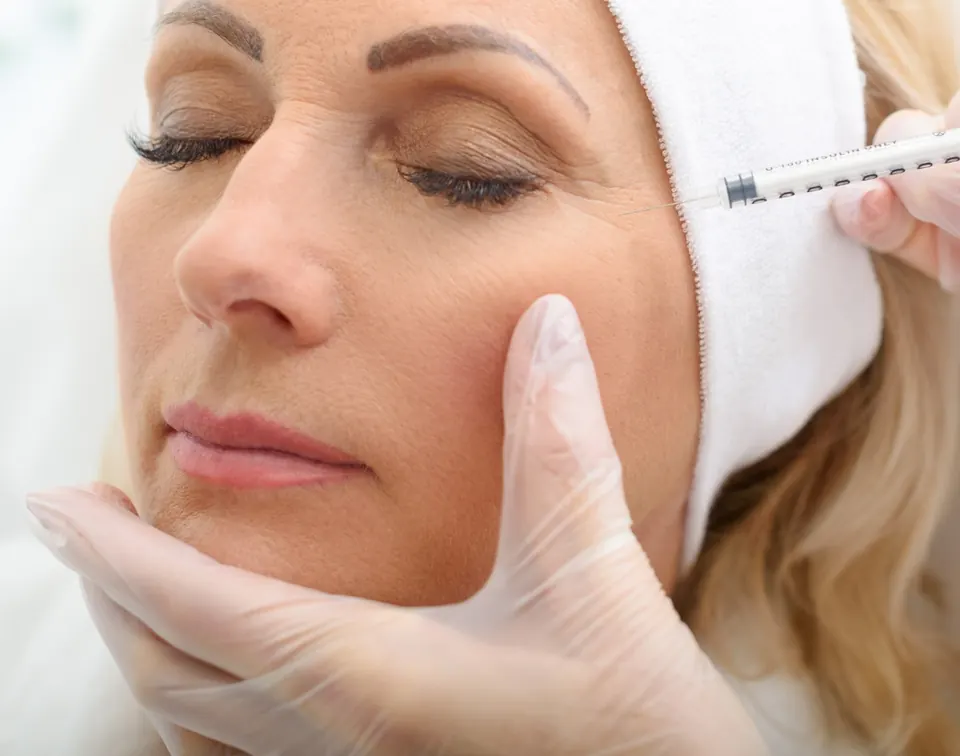
Ahead of Botox, don't skip telling your provider about any other neurotoxin injection in the past four months, or about blood thinners, muscle relaxants, sleep aids, and allergy or cold medicines.
The Botox Cosmetic prescribing information lists the medications patients should disclose, including:
- Any other botulinum toxin product in the last four months (Botox, Dysport, Xeomin, and others)
- Recent antibiotic injections
- Muscle relaxants
- Sleep medicine and allergy or cold medicine
- Anti-platelets or blood thinners
Also tell us if you're pregnant, planning pregnancy, or breastfeeding. The label says it isn't known whether Botox Cosmetic can harm an unborn baby or passes into breast milk and that’s because it’s really difficult to test anything on pregnant or nursing women.
Botox injections don't need much other prep.
Dermal fillers, lip filler, and facial contouring
Ahead of fillers, avoid aspirin, ibuprofen, vitamin E, St. John's Wort, and other non-prescribed products that increase bruising, and tell your provider if you get cold sores.
- Skip aspirin, ibuprofen, vitamin E, and St. John's Wort, which can increase bruising (prescribed blood thinners are the exception, as covered above)
- Stop smoking to support healing
- Stay hydrated
- Take a preventive antiviral like Valtrex if you have a history of cold sores, which matters most for lip augmentation
These apply to dermal fillers and facial contouring too. Ask us how many days to pause over-the-counter products, since it depends on what you take.
Laser hair removal
Ahead of laser hair removal, don't wax, pluck, or use electrolysis for at least four weeks, and avoid sun exposure, tanning beds, and sunless tanners.
Laser hair removal targets the hair follicle. Waxing and plucking pull the hair out of the follicle, which leaves the laser nothing to target.
- Stop waxing, plucking, or electrolysis at least four weeks ahead of treatment
- Shave the treatment area the day prior to your appointment
- Avoid sun exposure and tanning beds, and use broad-spectrum SPF 30 or higher
- Skip sunless tanning products
Shaving is fine because it leaves the root in place. If you have a tattoo near the treatment area, tell us. Laser hair removal near tattoos needs extra care.
Most patients need four to six laser hair removal sessions, and the same prep applies to each one.
IPL photofacial and vascular laser
Ahead of an IPL photofacial or vascular laser treatment, don't tan or get unprotected sun on the area, and tell your provider about recent sun exposure and any medications.
Light-based treatments target pigment and blood vessels, so tell us about any recent tan or sun exposure, and wear sunscreen daily in the weeks leading up to treatment.
This applies to an IPL photofacial for sun spots and rosacea and to vascular reduction for spider veins and broken capillaries.
Laser skin resurfacing
Ahead of laser skin resurfacing, avoid heavy sun exposure for up to two months, stop smoking, pause skincare products your provider flags, and tell your provider if you get cold sores.
Resurfacing removes layers of skin, so the skin you bring to the appointment matters.
- Too much sun up to two months ahead can cause permanent irregular pigmentation in the treated areas
- A prescription antiviral is recommended if you have a history of cold sores around the mouth
- Avoid aspirin, certain anti-inflammatory drugs, and some herbal medications that can increase bleeding
- Stop topical skincare products that might increase the risk of complications
- Stop smoking to promote healing
Mayo Clinic adds that you should avoid smoking for at least two weeks on either side of treatment.
At our clinic, skin resurfacing uses an Erbium YAG laser. We'll tell you exactly which products to pause at your consultation.
RF microneedling
Ahead of RF microneedling, don't come in with an active breakout, cold sore, or skin infection in the treatment area, and tell your provider about isotretinoin (Accutane) use and cold sore history.
Microneedling creates tiny channels in the skin, so an active infection or cold sore in the area is a reason to reschedule.
If you've taken isotretinoin, you may have heard you need to wait six months. That's often no longer the case.
A 2017 expert consensus in Dermatologic Surgery found insufficient evidence to delay hair removal lasers, vascular lasers, nonablative and ablative fractional devices, or superficial chemical peels.
The panel still advised against full-face fully ablative treatment and mechanical dermabrasion within six months of finishing isotretinoin.
Tell us when you last took it, and we'll plan your RF microneedling accordingly.
Tattoo reduction
Ahead of laser tattoo reduction, don't use tattoo removal creams or at-home kits, and keep the tattoo out of the sun.
The American Academy of Dermatology notes that the FDA warns tattoo removal creams and at-home kits can contain strong acids that cause rashes, burns, or permanent scars. Damaged skin is harder to treat.
Tattoo reduction takes several sessions, and the AAD recommends protecting treated skin from the sun for three months afterward.
GLP-1 weight loss
Ahead of starting a GLP-1 like semaglutide, don't leave out a personal or family history of medullary thyroid cancer, MEN 2, or pancreatitis, and tell your provider if you're planning a pregnancy.
The Wegovy prescribing information includes a boxed warning about thyroid C-cell tumors in rodent studies. It's not prescribed to people with a personal or family history of medullary thyroid carcinoma or Multiple Endocrine Neoplasia syndrome type 2 (MEN 2).
The label also says to stop Wegovy at least two months ahead of a planned pregnancy.
Already on a GLP-1 and getting a procedure?
Don't stop your GLP-1 on your own because of a procedure.
Multi-society guidance from 2024 led by the American Society of Anesthesiologists says most patients should continue GLP-1 medications ahead of elective surgery, with a 24-hour liquid diet for some higher-risk patients. That guidance applies to general anesthesia and deep sedation, which typical med spa treatments don't use.
If you're scheduled for surgery or sedation anywhere, tell that team you take a GLP-1.
GLP-1 injections at our clinic start with a full health history. It also helps to know what to expect in your first week on semaglutide.
Peptide therapy
Ahead of peptide therapy, don't leave out any supplements or products you've bought online, including "research use only" peptides, and bring a full medication list.
Some people come in already using peptides from online sellers. Tell us, even if you're unsure what's in the vial. It changes how we plan your peptide therapy.
Alcohol treatment
Ahead of alcohol treatment, don't stop heavy drinking abruptly on your own, because alcohol withdrawal can become life-threatening.
This is the opposite of most prep advice. MedlinePlus explains that alcohol withdrawal symptoms tend to start within 8 hours of the last drink and can quickly become life-threatening, especially if delirium tremens develops.
So come as you are. Tell us how much you drink and when you last drank. Our alcohol treatment program includes medically supervised detox for exactly this reason.
If you or someone else has seizures, hallucinations, severe confusion, or fever after stopping drinking, call 911.
Common myths about med spa prep
Myth: Stop all blood thinners a week ahead. Over-the-counter products may be paused, but prescribed blood thinners should only change with your prescriber's approval.
Myth: You can't have any laser for six months after Accutane. A 2017 expert consensus found no reason to delay hair removal, vascular, or fractional lasers after isotretinoin.
Myth: Shaving ruins laser hair removal. Shaving is recommended. Waxing and plucking are what to avoid.
Myth: You should stop your GLP-1 for any procedure. Most patients continue GLP-1 medications, even ahead of surgery with anesthesia, under 2024 multi-society guidance.
Myth: Prep is the same for every treatment. Botox prep is mostly disclosure, while laser prep is mostly sun and hair removal.
What to do next
Not sure whether this fits your recovery?
A straight conversation beats a checkout cart. Bring your questions to a licensed provider who knows the current evidence and the current law.
Frequently asked questions
Should I stop blood thinners ahead of Botox or fillers?
Don't stop a prescribed blood thinner without talking to the provider who prescribed it. Blood thinners can increase bruising, but they protect against clots and strokes. Over-the-counter products like aspirin, ibuprofen, and vitamin E may be paused for some people. Your injector can help you plan the timing.
Should I shave ahead of laser hair removal?
Yes. Mayo Clinic recommends shaving the treatment area the day prior to laser hair removal. Shaving leaves the hair root in place for the laser to target. Avoid waxing, plucking, and electrolysis for at least four weeks, because those remove the root the laser needs.
Can I get laser treatment or microneedling after Accutane?
Often, yes. A 2017 expert consensus in Dermatologic Surgery found insufficient evidence to delay hair removal lasers, vascular lasers, fractional lasers, or superficial chemical peels after isotretinoin. The panel still advised waiting six months for full-face fully ablative lasers and mechanical dermabrasion. Tell your provider when you finished it.
Can I keep taking Ozempic or Wegovy ahead of a med spa treatment?
Yes, in most cases. Typical med spa treatments don't use general anesthesia or deep sedation, which is where GLP-1 medications raise concerns. Even for surgery, 2024 guidance led by the American Society of Anesthesiologists says most patients should continue their GLP-1. Tell any surgical team you take one.
Can I get Botox if I'm pregnant or breastfeeding?
Tell your provider first. The Botox Cosmetic label says it isn't known whether Botox can harm an unborn baby or whether it passes into breast milk. Your provider can talk through the options and whether to wait.

About the author