
Written by Rick Meyers, FNP-BC, Functional Wellness & Aesthetics
Key Highlights
- Complete laser tattoo removal costs $1,000 to $10,000, spread across 3 to 20 sessions.
- The national average fee for a laser skin treatment like tattoo removal is $697 per treatment, and that figure excludes consultation and aftercare costs.
- Session count, not tattoo size alone, sets your total. Six factors decide it, and a published clinical scale scores all six.
- Sessions sit 6 to 8 weeks apart, so a 10-session plan runs 14 to 18 months from start to finish.
- Insurance does not cover tattoo removal, though financing plans and free community programs both exist.
Laser tattoo removal costs $1,000 to $10,000 in total, because full clearance takes 3 to 20 sessions spaced 6 to 8 weeks apart. Every clinic quotes you a per-session price first. We think that figure tells you the least about your final bill, and the six factors below explain why.
| What most cost pages tell you | What sets your total |
| “$200 to $500 per session” | Session count, which runs 3 to 20 |
| “It depends on the size” | Size is one of six factors, and not the strongest |
| “Black ink is cheapest to remove” | True, though placement on your body can matter more |
| “Get a quote for your tattoo” | The quote you want is for the plan, not the session |
| “Creams are the budget option” | The FDA warns they do not work and can scar you |
How much does laser tattoo removal cost per session?
A single laser session averages $697 nationally, according to the American Society of Plastic Surgeons, which also notes that this fee covers only part of what you pay. Consultation fees, prescriptions, and any medical tests are billed on top of it.
The ASPS figure comes from surgical practices, so it sits at the higher end of the market. The same treatment at a medical spa typically costs less than it does at a dermatologist or plastic surgeon, which is one reason quotes across town can differ by hundreds of dollars for identical work.
Clinics also structure their pricing four different ways: per square inch of inked area, by size band, as a flat per-visit fee, or as a prepaid package covering a set number of visits. Two quotes built on two different structures cannot be compared side by side. Ask which structure you are being quoted under, then ask what a full course would come to under that structure.
What a per-session price usually leaves out:
- The consultation and assessment, where the number of sessions gets estimated
- Numbing cream or a local anesthetic injection
- Aftercare supplies and any follow-up visits
- Additional passes if your ink responds more slowly than expected
How many sessions does it take to remove a tattoo?
Most tattoos need somewhere between 3 and 20 laser sessions, with 10 as the average across a published review of 100 patients treated to complete clearance. That spread is the whole cost question. At the $697 national average, a 4-session case runs under $2,800 while a 15-session case passes $10,000, and both cases start from the same per-visit price.
One visit is never enough, and the reason is mechanical. A tattoo artist lays ink down in layers, and a laser cannot safely break apart every layer at once. Your immune system, not the laser itself, clears the shattered pigment out of your skin over the following weeks, so the interval between visits is doing as much work as the visit.
Those intervals stretch the calendar more than people expect. At 6 to 8 weeks between sessions, an average 10-session plan takes 14 to 18 months. Budgeting monthly rather than in a lump sum makes the number far easier to live with.
Why do some tattoos need more sessions than others?
Ink colour, ink density, the age of the tattoo, your skin type, existing scarring, and where the tattoo sits on your body all change how quickly pigment clears. Black responds fastest. A dense, multicoloured piece over an older cover-up on your ankle can need triple the sessions of a small black design on your shoulder.

How can you estimate your own tattoo removal cost?
You can estimate it by scoring your tattoo on the Kirby-Desai scale, a six-factor system published in the Journal of Clinical and Aesthetic Dermatology that was designed to predict how many laser sessions a tattoo will need. The authors built it so patients could get a firmer cost calculation up front. Across their 100-patient review, the scores tracked closely with the treatment counts patients needed.
Each factor carries a point value. Add them up, and the total approximates your session count.
<graphic: six-row table showing Kirby-Desai scoring factors and point ranges>
| Factor | Point range | What raises your score |
| Skin type (Fitzpatrick I to VI) | 1 to 6 | Deeper natural pigment |
| Location on the body | 1 to 5 | Hands, feet, lower arms, lower legs |
| Ink colour | 1 to 4 | Any colour beyond black |
| Amount of ink | 1 to 4 | Dense, professional, multicoloured work |
| Existing scarring | 0 to 5 | Scarring or texture change at the site |
| Cover-up layering | 0 or 2 | A tattoo inked over an older tattoo |
Two of those factors surprise almost everyone.
The first is placement. Blood and lymphatic supply vary across your body, and clearing pigment depends on circulation reaching the site. Head and neck tattoos score just 1 point because that region carries the richest supply. A tattoo on your ankle or wrist scores 5, the maximum, because circulation out at the extremities is comparatively poor. The ink is identical. The clearance rate is not.
The second is skin type, scored 1 through 6 on the Fitzpatrick scale. Deeper skin tones absorb more laser energy in the epidermis, so providers use gentler settings and longer intervals to protect the surrounding skin, which stretches the course out.
Here is what that means in dollars. Take one small black-ink design, no scarring, no cover-up, on fair skin. Placed on the upper back it scores roughly 7 points, or about seven sessions, landing near $4,900 at the national average. The identical design on the ankle scores about 10, or ten sessions, landing near $7,000. Same tattoo, same artist, same ink, and a $2,000 gap driven entirely by where it sits.
Two limits are worth stating plainly. The scale estimates rather than guarantees, and it assumes a Q-switched Nd:YAG or Alexandrite laser used at 6 to 8 week intervals. Tattoos scoring above 15 points may prove difficult to clear fully, which is a conversation to have with a provider.
Ready to turn those six factors into a real number for your tattoo?
Free consultation. We score your tattoo, then we quote.
How much does it cost to remove a small tattoo?
Small tattoos usually cost less overall, though not always, because size is only one component of the ink-volume score and carries no more weight than placement or colour. A two-inch black star on your wrist can outscore a palm-sized shoulder piece and cost more to clear despite being a fraction of the area.
Ask your provider to score the tattoo rather than measure it. A measurement gives you a per-session price. A score gives you a total.
Is it cheaper to fade a tattoo for a cover-up than remove it?
Yes, and it is the biggest lever you control. Fading ink enough for a tattoo artist to work over it typically takes a handful of sessions instead of a full course, which can cut your spend by more than half. If a new design appeals to you more than bare skin does, say so at the consultation, because it changes the plan and the price.
Does insurance cover tattoo removal?
Insurance does not cover tattoo removal, because insurers classify it as a cosmetic procedure. That holds across plans, and it applies at a med spa, a dermatologist, and a surgical practice alike.
Two things soften the cost. Many providers offer payment plans, which spread a multi-session course across the 14 to 18 months you would be in treatment anyway. Separately, free and low-cost removal programs exist for people leaving incarceration, gang involvement, or trafficking situations, run through community organisations and searchable through national directories.
Do cheaper options like tattoo removal creams work?
Removal creams and at-home kits do not remove tattoos, and the FDA has warned consumers about them directly. There is no evidence any of these products clears a tattoo, and they frequently contain strong acids that cause rashes, burns, and permanent scarring. You keep the tattoo and gain the damage.
Salabrasion, an abrasive home method that circulates in online videos, carries a serious infection risk and commonly leaves a scar. We will not walk anyone through it.
The financial argument against both is the one people rarely hear. Scarring adds up to 5 points on the Kirby-Desai scale, which is more than colour contributes and as much as the worst placement on the body. Damaging your skin at home converts a straightforward removal into a longer, more expensive one, assuming it stays removable at all. The shortcut costs more than the route it skips.
Red flags in a tattoo removal quote:
- A total price given without anyone examining the tattoo
- A guaranteed number of sessions promised without an assessment
- A promise of complete clearance regardless of ink colour
- A clinic using a single laser wavelength for a multicoloured piece, since one laser cannot address every colour
What does tattoo removal cost in Salem, Oregon?
We do not publish a flat price for tattoo removal, because a flat price would be guesswork until someone has looked at your ink. Pricing at Functional Wellness & Aesthetics starts with a free consultation where we assess size, colour, age, placement, your skin type, and how your skin heals, then build a session estimate from that.
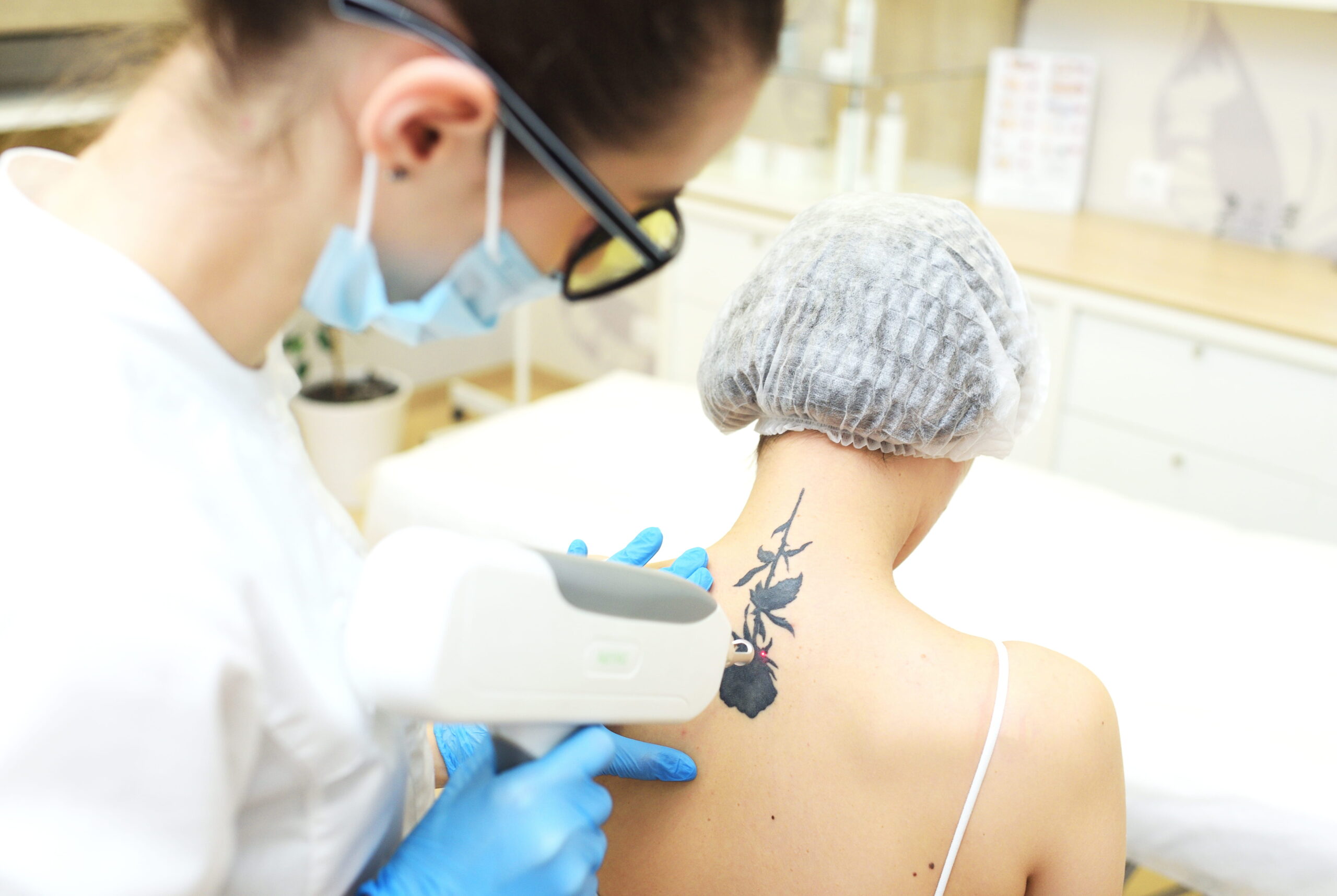
Treatment itself is quicker than most people picture. Sessions run 15 to 30 minutes depending on the area, using our Q-switched YAG/KTP laser, with cooling and numbing options available for comfort. You leave with written aftercare instructions and a plan you can budget against.
Setting matters to your bill as well. A medical spa generally prices below a surgical practice for the same laser work, which is one reason the national average overstates what many patients in the Salem area pay. Our clinic was founded in 2020 by Rick Meyers, FNP-BC, who brings nearly 30 years of medical experience to every treatment plan, and you can read more about laser tattoo removal in Salem.
Tattoo Removal Cost FAQ
How much does tattoo removal cost in total?
Total cost usually falls between $1,000 and $10,000, depending on how many sessions your tattoo needs. Complete clearance takes 3 to 20 sessions, averaging 10, and each session is priced individually or bundled into a package. A provider can narrow that range considerably after scoring your tattoo at a consultation.
How much does tattoo removal hurt?
Laser tattoo removal feels uncomfortable to painful, with many patients comparing each pulse to a rubber band snap against the skin. Numbing cream or an injected local anesthetic reduces it substantially, and both are standard offerings. Sessions are short, which limits how long any discomfort lasts.
Can a tattoo be completely removed?
Many tattoos clear completely, though not all of them do. Ink colour, density, scarring, and skin type all affect the final result, and tattoos scoring above 15 points on the Kirby-Desai scale can be difficult to clear fully. A provider who examines your tattoo can tell you which outcome is realistic.
How long does the whole process take?
Expect 14 to 18 months for an average course. Sessions sit 6 to 8 weeks apart so your skin can heal and your immune system can flush the shattered pigment, and skipping that interval raises your risk of side effects. Shorter courses of three or four sessions finish inside a year.
Why do two clinics quote such different prices for the same tattoo?
Clinics price by square inch, by size band, per visit, or by package, so two quotes often describe different things. Practice type matters as well, since surgical practices generally charge more than medical spas. Ask each clinic for a full-course estimate rather than a per-session figure.
TL;DR
- Complete removal costs $1,000 to $10,000, driven by a session count that ranges from 3 to 20.
- The national average is $697 per treatment, and that figure excludes consultation, prescriptions, and tests.
- Six factors set your session count: skin type, placement, colour, ink volume, scarring, and cover-up layering.
- Placement can swing your total by thousands. Ankle and wrist tattoos need more sessions than head, neck, or trunk tattoos.
- Fading for a cover-up costs far less than clearing skin completely, and it is the main lever you control.
- Insurance never covers it, though payment plans and free community programs are both available.
- Removal creams do not work, and the scarring they cause makes professional removal longer and dearer.
A real number starts with someone looking at your tattoo and scoring all six factors.
See what your tattoo would cost
Free consultation, and you leave with a session estimate.
About the Author
Rick Meyers, FNP-BC, is the founder of Functional Wellness & Aesthetics in Salem, Oregon. He brings nearly 30 years of medical experience to the practice he opened in 2020, with training spanning laser treatments, dermal fillers, skin rejuvenation, medically supervised weight loss, pain management, and addiction treatment. He built FWA around minimally invasive care where every plan starts with an assessment rather than a flat retail price. Patients can reach the clinic at 503-991-8549 or book a free consultation at the Salem office on Ramsgate Square SE.
This guide is for general education and reflects typical 2026 pricing ranges rather than a quote or medical advice. Costs change, and the right plan depends on your tattoo, your skin, and your goals. Talk with a licensed provider about what is appropriate for you.