Key highlights
- Both HydraFacial and Diamond Glow cleanse, exfoliate, extract, and infuse the skin, but with different technology.
- HydraFacial uses vortex technology and chemical exfoliation, ideal for dehydrated, sensitive, or dull skin.
- Diamond Glow uses a diamond-tipped wand for physical exfoliation, ideal for rough texture, acne scars, and hyperpigmentation.
- Both treatments typically produce results lasting about 3 to 4 weeks, with monthly sessions recommended.
- Diamond Glow may cost slightly more due to its medical-grade resurfacing component.
If you've been researching advanced facials, you've probably seen two names everywhere: HydraFacial and Diamond Glow. They both promise smoother skin, better texture, and that fresh, post-facial glow. So what's the real difference?
The short answer is this: both treatments exfoliate, extract, and infuse, but they do it in different ways, with different strengths depending on your skin goals.
What is a HydraFacial?
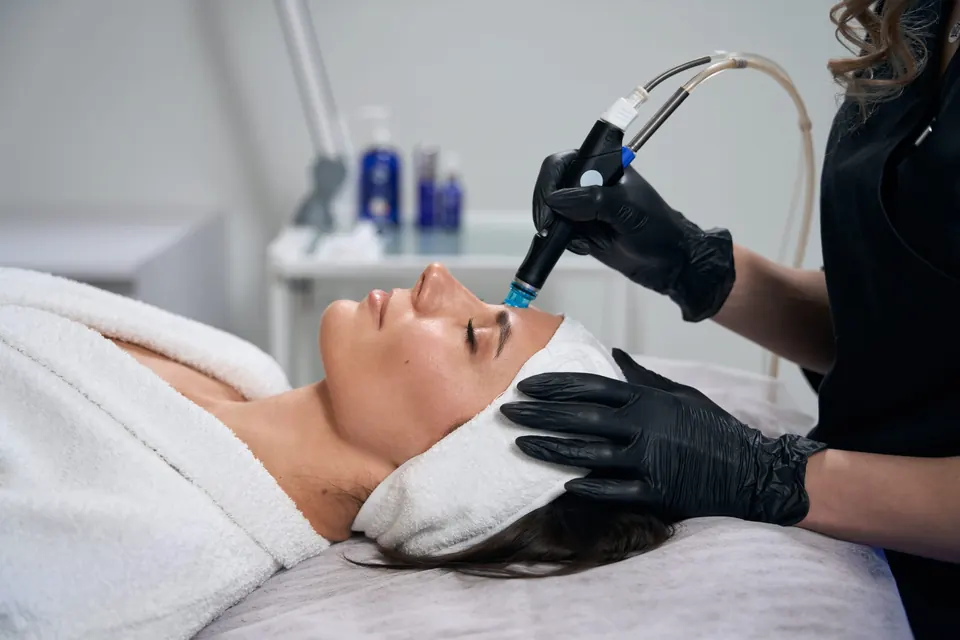
HydraFacial is a multi-step resurfacing treatment that uses a patented vortex technology to cleanse, exfoliate, extract, and infuse the skin with hydrating serums.
- Gentle chemical exfoliation
- Automated suction extraction
- Infusion of hydrating and antioxidant-rich serums
The device uses a spiral tip that creates a vortex effect, lifting debris while delivering targeted ingredients. HydraFacial is best for dehydrated skin, fine lines, dull or tired complexion, mild congestion, and sensitive skin types. It's often described as refreshing and hydrating, with no discomfort and virtually no downtime.
What is Diamond Glow?
DiamondGlow is a medical-grade resurfacing treatment that uses a diamond-tipped wand to physically exfoliate the skin while simultaneously extracting debris and infusing customized serums.
- Diamond-tip microdermabrasion exfoliation
- Manual suction extraction
- Serum infusion customized to your skin condition
Unlike HydraFacial's chemical exfoliation step, Diamond Glow uses real diamond tips to physically remove dead skin cells, allowing for deeper resurfacing and more noticeable texture improvement. It's best for rough texture, acne scars, enlarged pores, hyperpigmentation, and thicker or more resilient skin. Diamond Glow can feel slightly more intensive compared to HydraFacial, but it remains non-invasive with little to no downtime.
The Key Difference Between HydraFacial and Diamond Glow
Here's the simplest way to understand it: HydraFacial focuses more on hydration and gentle resurfacing, while Diamond Glow focuses more on physical exfoliation and deeper texture correction. Both cleanse, extract, and infuse. The difference is in how aggressively they exfoliate and how targeted the resurfacing is.
| Feature | HydraFacial | Diamond Glow |
|---|---|---|
| Exfoliation Type | Chemical + gentle mechanical | Physical diamond-tip exfoliation |
| Customization | Booster serums | Customized medical-grade serums |
| Texture Correction | Mild to moderate | Moderate to more noticeable |
| Sensitivity Level | Ideal for sensitive skin | Better for resilient skin types |
| Downtime | None | Minimal |
Which Facial Gives Better Results?
There isn't a universal “better.” It depends on your skin. If your skin feels dry, dull, or reactive, HydraFacial may be the right starting point. If you're dealing with acne scarring, uneven texture, or stubborn congestion, Diamond Glow may provide more visible improvement. Many patients rotate between the two throughout the year depending on their skin condition and goals.
Which One Lasts Longer, and Is One More Expensive?
Both treatments typically produce results that last about 3 to 4 weeks. Consistency is key, and monthly treatments tend to produce cumulative improvements in clarity, tone, and smoothness.
Pricing varies by location and customization. Diamond Glow may be slightly higher in cost due to its medical-grade resurfacing component, but both are considered premium, results-driven treatments.
Who Should Avoid These Treatments?
Both treatments are generally safe for most skin types. However, you may need to postpone treatment if you have active skin infections, open wounds, severe rosacea flare-ups, or a recent laser or deep chemical peel. A professional skin assessment ensures safety and optimal results.
Not sure whether this fits your recovery?
A straight conversation beats a checkout cart. Bring your questions to a licensed provider who knows the current evidence and the current law.
TL;DR
- HydraFacial uses vortex technology and chemical exfoliation, best for hydration and sensitive skin.
- Diamond Glow uses diamond-tip physical exfoliation, best for texture, scars, and pigmentation.
- Both cleanse, extract, and infuse, but differ in exfoliation intensity.
- Results typically last 3 to 4 weeks for both treatments.
- Diamond Glow may cost slightly more due to its medical-grade resurfacing component.
Neither treatment is universally “better” - the right choice depends on whether your skin needs gentle hydration or deeper texture correction.
Frequently asked questions
Is Diamond Glow more aggressive than HydraFacial?
Yes, Diamond Glow uses physical diamond-tip exfoliation, which makes it slightly more intensive in resurfacing compared to HydraFacial's gentler exfoliation process.
Which is better for acne-prone skin?
Both can help acne-prone skin. HydraFacial is excellent for active congestion and hydration. Diamond Glow may be more effective for acne scars and texture concerns.
Does either treatment hurt?
Neither treatment is painful. Diamond Glow may feel slightly more abrasive, but most patients describe it as comfortable.
Can I wear makeup after?
Yes. Most patients return to normal activities immediately after treatment.
How often should I get these facials?
Every 4 weeks is ideal for maintaining results and supporting long-term skin health.

About the author