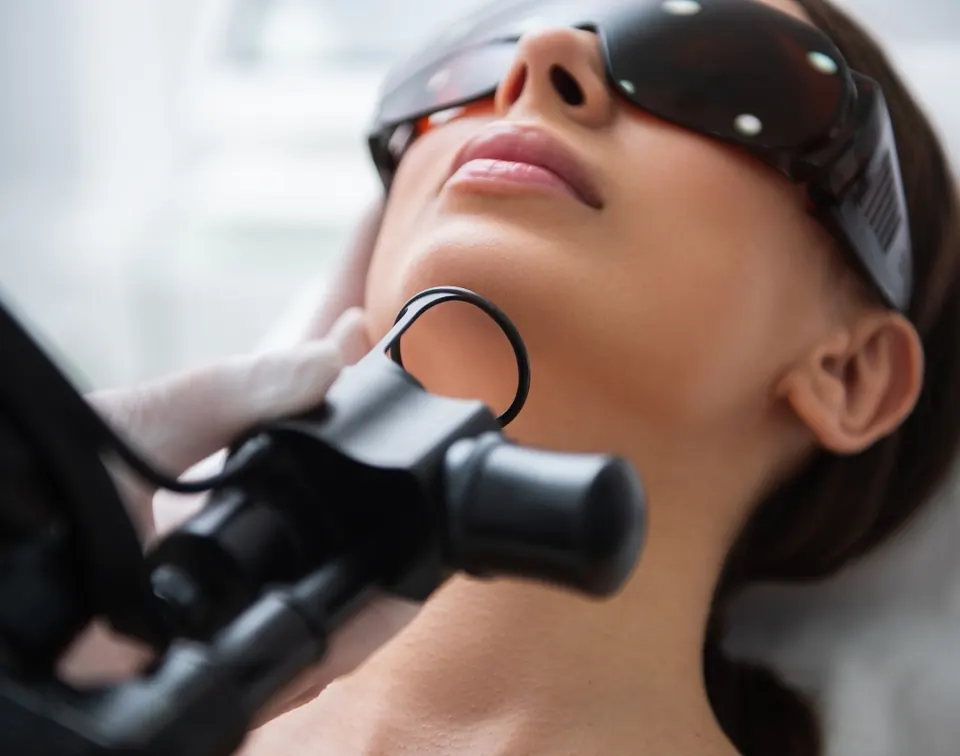
Key highlights
- Non-surgical skin tightening heats deeper skin layers so the body builds new collagen.
- Ultrasound results show within 2 to 6 months, and radiofrequency results peak at about 6 months.
- A cream or lotion cannot lift sagging skin, according to the American Academy of Dermatology.
- Laser resurfacing usually tightens better than other non-surgical procedures and requires 5 to 7 days at home.
- The FDA states that RF microneedling is a medical procedure and the devices should not be used at home.
Skin tightening is any treatment that firms loose skin, and the non-surgical kinds work by heating deeper skin layers so the body builds new collagen. The options differ far more in downtime and number of visits than in how they work. At our Salem office, the first question we hear is which one is strongest, and the answer starts with how loose your skin is.
How do the non-surgical skin tightening options compare?
The five main non-surgical options differ in how deep they work, how many visits they take, and how long you stay home afterward. Timelines in the table come from the American Academy of Dermatology unless a cell says otherwise, including its finding that modest lifting from one ultrasound treatment appears within 2 to 6 months.
| Option | What it does | How many treatments | When results show | Downtime |
|---|---|---|---|---|
| Skin-firming creams | Moisturize and plump the surface. Cannot lift sagging skin. | Daily use | Temporary plumping only | None |
| Ultrasound | Sends heat deep into the skin to prompt collagen | 1 for most people | 2 to 6 months | Little or none |
| Radiofrequency | Heats the tissue beneath the skin from a device on the surface | 1 for most people | Best at about 6 months | Little or none |
| RF microneedling | Delivers radiofrequency heat through fine needles into the skin | 3 to 4 at our clinic, spaced 4 to 6 weeks apart | 2 to 6 months at our clinic | Slight swelling and redness in one clinical study |
| Laser resurfacing | Resurfaces the skin with laser energy | Varies by laser | Within 2 weeks of healing | 5 to 7 days at home |
Ultrasound and surface radiofrequency are offered at other practices. Our Salem clinic offers RF microneedling and Erbium YAG laser resurfacing, and the RF microneedling row reflects our own treatment schedule.
Does non-surgical skin tightening work?
Non-surgical skin tightening works, and the results are modest. The American Academy of Dermatology describes the lifting from non-invasive procedures as modest and says a surgical lift, such as a facelift, gives the most dramatic results.
The patients who are happiest with these treatments came in wanting a firmer jawline and smoother texture over several months. A device will not deliver what a facelift does, and we say so at the consultation.
Do skin tightening creams work?
Skin tightening creams produce subtle results at best. The American Academy of Dermatology states that a cream or lotion cannot penetrate deeply enough to lift sagging skin. A good moisturizer plumps the surface temporarily, and a product containing a retinoid may help your body make a little more collagen over time.
Is sagging always loose skin?
Sagging is often lost volume, which skin tightening does not replace. Think of a tent. Stretched fabric makes a tent sag, and so does a missing pole. Energy treatments firm the fabric, while dermal fillers put the pole back. A provider can tell which one you are looking at by examining your face.
Volume loss and looseness often arrive together after a fast change in weight, and our guide to facial hollowing after rapid weight loss explains how each one is treated.
What is the best skin tightening treatment?
The best skin tightening treatment is the one matched to how loose your skin is, where the looseness sits, and how many days you can stay home. A single device does not win on all three. A practice that owns one device tends to recommend that device, so ask what else was considered.
Botox relaxes the muscles that crease skin, which smooths lines without tightening anything.
What does RF microneedling do for loose skin?
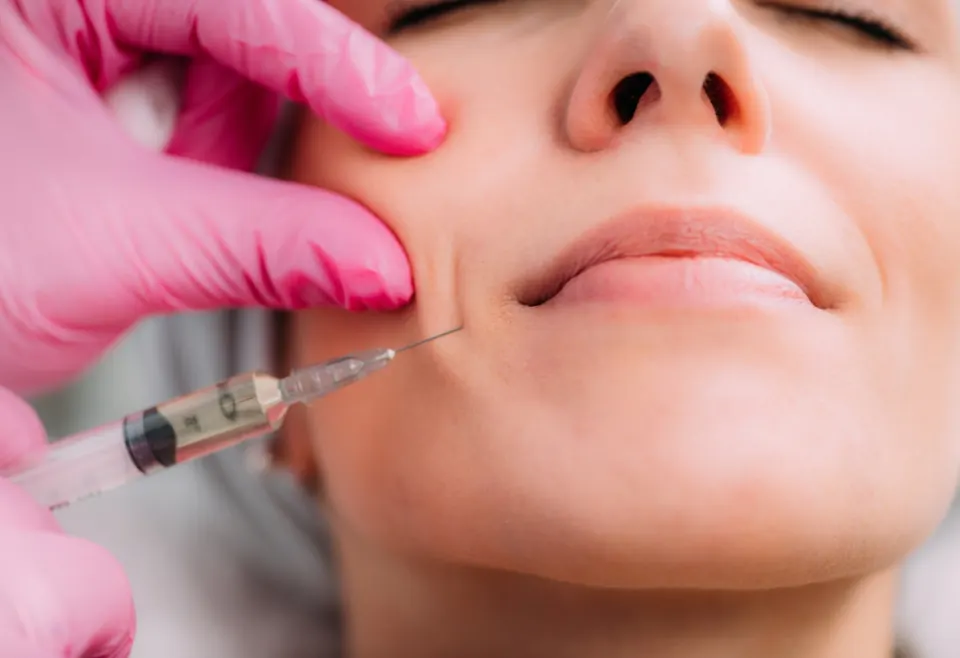
RF microneedling sends radiofrequency heat through fine needles into the skin, and each needle tip creates a small zone of heat that prompts new collagen. Results build over months. Our radiofrequency microneedling in Salem is planned as 3 to 4 treatments spaced 4 to 6 weeks apart, with the best results at 2 to 6 months.
In one clinical study of 30 patients treated on the lower face, jawline, and neck, researchers reported slight swelling and redness with low to no downtime. Participants rated the pain at 5.6 out of 10 on average, so numbing matters.
Does laser resurfacing tighten skin?
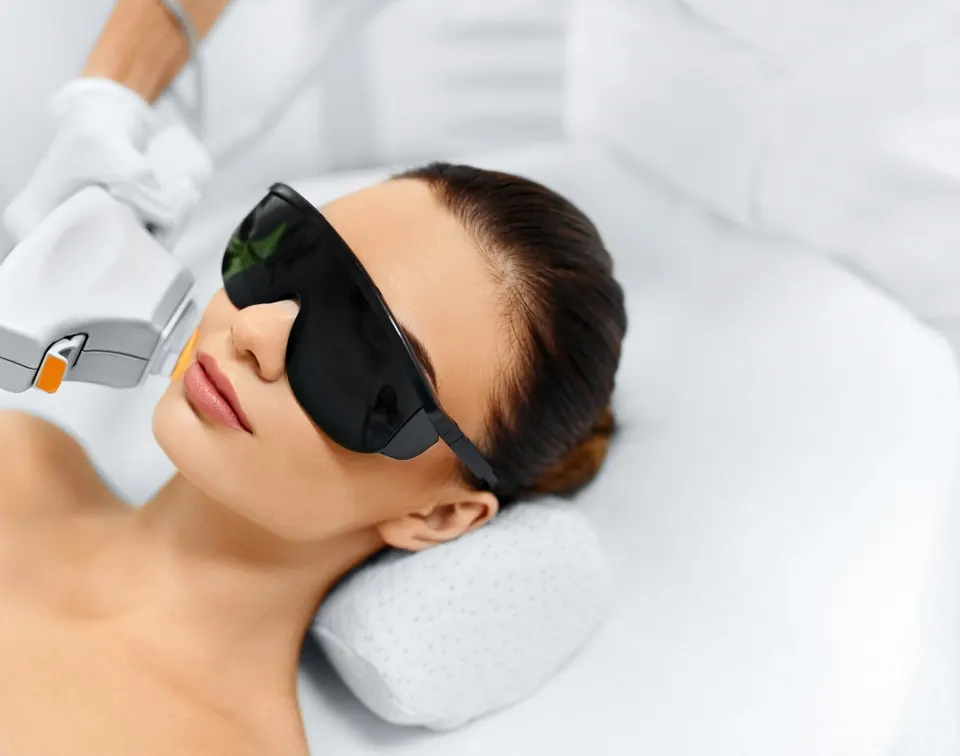
Laser resurfacing tightens skin, and the American Academy of Dermatology says it usually does so better than any other non-surgical procedure. The tradeoff is recovery. The AAD describes 5 to 7 days at home and a greater risk of side effects such as scarring, with tightening visible within 2 weeks of healing.
Recovery depends on how deep the laser is set, which is decided at your assessment. Our Erbium YAG skin resurfacing is the laser option at the Salem office.
What about ultrasound and radiofrequency?
Ultrasound and surface radiofrequency tighten without needles or broken skin, which is why they carry little or no downtime. The AAD reports that radiofrequency results can last 2 to 3 years with the right skin care. We do not offer either treatment at our Salem office, and we will say so if one suits you better.
How long does skin tightening last?
Skin tightening results from radiofrequency last 2 to 3 years with the right skin care, according to the American Academy of Dermatology. Skin keeps aging after any non-surgical treatment, so plan on maintenance.
Daily habits decide how long a result holds. The AAD lists sun protection, not smoking, and a stable weight among the habits tied to the best results, and our guide on how to tighten face skin covers the at-home side.
What are the risks of skin tightening?
The common side effects of non-invasive skin tightening are temporary redness and swelling, and the serious risks rise with treatments that break the skin or resurface it.
In October 2025, the FDA issued a safety communication on RF microneedling after receiving reports of burns, scarring, fat loss, disfigurement, and nerve damage. The agency describes RF microneedling as a medical procedure. Patients are advised to choose a licensed provider trained on the device and to ask which device will be used.
We agree with that advice, and we would rather you ask us those questions than assume the answers.
Red flags:
- A device sold for RF microneedling at home
- A provider who will not name the device being used
- Treatment offered outside a licensed clinical setting
- A promise of facelift results from one session
- A booking taken without a review of your health history and medications
Which option fits depends on what a provider sees when examining your skin.
CTA: Find out which option fits your skin
Consultations at the Salem office are free.
Who is a good candidate for skin tightening?
A good candidate for non-surgical skin tightening has a small amount of sagging skin and is in good general health. The AAD advises against these procedures for anyone who is pregnant, has a skin infection, or takes certain medications.
People with a lot of sagging skin may see little benefit, and a surgical consultation is the more useful next step for them.
Consider a patient in her fifties who asks about tightening her jawline. The assessment shows firm skin along the jaw and lost volume in the cheeks above it. She leaves with a filler plan and no tightening treatment at all.
Does skin tightening help loose skin after weight loss?
Skin tightening can firm mildly loose skin after weight loss, and its effect is limited when there is a lot of excess skin. The AAD notes that results are best in people who maintain a stable weight, so timing matters. If you are losing weight under medical care, ask your provider when a skin assessment makes sense.
Where can you get skin tightening in Salem, Oregon?
Functional Wellness & Aesthetics offers two skin tightening treatments at 180 Ramsgate Square SE in Salem: RF microneedling and Erbium YAG laser resurfacing. Rick Meyers, FNP-BC, a board-certified family nurse practitioner with nearly 30 years of medical experience, performs the treatments himself.
Rick reviews your health history, examines your skin, and then recommends a plan, which is priced after that assessment. Sometimes the recommendation is filler, a different clinic, or nothing.
A skin tightening plan starts with a look at your skin and your health history.
CTA: Get a skin tightening plan for your skin
Rick assesses first, then recommends.
Not sure whether this fits your recovery?
A straight conversation beats a checkout cart. Bring your questions to a licensed provider who knows the current evidence and the current law.
TL;DR
- Non-surgical skin tightening heats deeper skin layers so the body builds new collagen.
- Results are modest and suit a small amount of sagging skin.
- Ultrasound and radiofrequency usually take 1 treatment, and RF microneedling at our clinic takes 3 to 4.
- Laser resurfacing usually tightens most without surgery and needs 5 to 7 days at home.
- Creams cannot lift sagging skin, and RF microneedling devices should not be used at home.
Frequently asked questions
How much does skin tightening cost?
Noninvasive skin tightening with devices such as Thermage and Ulthera carried an average physician fee of \$2,326 in 2023, according to the American Society of Plastic Surgeons. The figure is a national average for the provider's fee. At Functional Wellness & Aesthetics, your price is quoted after an assessment, and consultations are free.
Does insurance cover skin tightening?
Health insurance does not cover skin tightening, according to the American Academy of Dermatology. Eligible treatments at our clinic may qualify for Cherry financing. Ask at your consultation if your treatment qualifies, and check with your plan administrator about any HSA or FSA rules that apply to you.
Does skin tightening hurt?
Discomfort depends on the treatment. The AAD says non-invasive procedures may cause some discomfort during the session and usually none afterward. RF microneedling involves needles and heat, and patients in one clinical study rated the pain at 5.6 out of 10 on average. Our clinic applies a topical numbing cream first.
Can you have skin tightening while pregnant?
The American Academy of Dermatology states that skin tightening procedures are not right for anyone who is pregnant. The same guidance applies to people with a skin infection and people taking certain medications. Tell your provider about a pregnancy and every medication you take so the timing can be planned around them.
Can you do RF microneedling at home?
RF microneedling should not be done at home. The FDA states that RF microneedling is a medical procedure and that these devices are not for home use, and the agency has received reports of burns, scarring, and nerve damage. A licensed provider trained on the specific device should perform the treatment.

About the author